
Mental Wellness: Building a Healthy Mind in a Demanding World
Reading time – 10 minutes
In today’s fast-paced, always connected world, mental wellness has become one of the most important and most misunderstood aspects of overall health. We often focus on physical fitness, nutrition, and productivity, yet overlook the health of our minds until we feel overwhelmed, exhausted, or emotionally drained. Mental wellness is not simply the absence of mental illness; it is the ongoing practice of maintaining balance, resilience, and emotional well-being in the face of life’s challenges.
Mental wellness affects how we think, feel, act, handle stress, relate to others, and make decisions. It influences our ability to enjoy life, cope with difficulties, and reach our potential. Understanding mental wellness and learning how to nurture it is not a luxury, it is essential for a fulfilling and sustainable life.
What Is Mental Wellness?
Mental wellness refers to a state of well-being in which an individual can cope with normal stresses, work productively, maintain meaningful relationships, and contribute to their community. It exists on a spectrum, meaning it can fluctuate depending on life circumstances, habits, and support systems.
Unlike the outdated notion that mental health is only relevant when something goes “wrong,” mental wellness emphasizes prevention, self-awareness, and daily care. Just as physical fitness requires consistent effort, mental wellness is built through small, intentional practices over time.
Key components of mental wellness include:
-
Emotional awareness and regulation
-
Stress management
-
Self-esteem and self-compassion
-
Healthy relationships
-
Purpose and meaning
-
Adaptability and resilience
Mental wellness does not mean being happy all the time. It means being able to experience a full range of emotions, joy, sadness, anger, fear without being overwhelmed by them.
Why Mental Wellness Matters More Than Ever
Modern life presents unique challenges to mental wellness. Constant digital stimulation, social comparison, economic pressure, global uncertainty, and blurred boundaries between work and personal life can strain even the most resilient individuals.
Chronic stress, if left unmanaged, can lead to anxiety, depression, burnout, sleep problems, and physical health issues such as heart disease and weakened immunity. On the other hand, strong mental wellness can improve focus, creativity, relationships, and overall life satisfaction.
Research consistently shows that people who prioritize mental well-being are better equipped to:
-
Handle stress and setbacks
-
Maintain healthier relationships
-
Perform better at work or school
-
Make thoughtful decisions
-
Experience greater life fulfillment
Mental wellness is not selfish, it allows us to show up more fully for ourselves and for others.
Common Barriers to Mental Wellness
Despite growing awareness, many people struggle to prioritize their mental health. Some common barriers include stigma, lack of time, unrealistic expectations, and misunderstanding what mental wellness actually looks like.
One of the biggest obstacles is the belief that struggling mentally is a sign of weakness. In reality, acknowledging emotional difficulty is a sign of self-awareness and strength. Another barrier is the misconception that self-care must be expensive, time-consuming, or indulgent. True mental wellness often comes from simple, consistent habits rather than grand gestures.
Perfectionism is another major challenge. Many people believe they must “have it all together” before they deserve rest or support. This mindset can lead to chronic stress and emotional exhaustion.
The Role of Self-Awareness
Self-awareness is the foundation of mental wellness. It involves paying attention to your thoughts, emotions, behaviors, and triggers without judgment. When you understand how your mind works, you gain the power to respond rather than react.
Practicing self-awareness might include:
-
Noticing patterns in your mood or energy
-
Identifying situations that increase stress or anxiety
-
Recognizing negative self-talk
-
Understanding your emotional needs
Journaling, mindfulness, and regular self-reflection are powerful tools for building self-awareness. Over time, they help you make choices that align with your values and well-being.
Managing Stress in Healthy Ways
Stress is an unavoidable part of life, but how we respond to it makes all the difference. Healthy stress management does not eliminate stress—it helps us navigate it without becoming overwhelmed.
Effective stress management strategies include:
-
Deep breathing and relaxation techniques
-
Physical activity, such as walking, yoga, or stretching
-
Setting boundaries around work and technology
-
Prioritizing rest and sleep
-
Breaking large tasks into manageable steps
It’s also important to recognize when stress becomes chronic or unmanageable. Persistent stress may be a sign that deeper changes or additional support are needed.
The Importance of Emotional Expression
Many people are taught to suppress or ignore their emotions, especially uncomfortable ones like sadness, anger, or fear. However, emotional suppression often leads to increased stress, anxiety, and physical tension.
Mental wellness involves allowing emotions to exist without judgment. This does not mean acting impulsively on every feeling, but rather acknowledging emotions and choosing how to respond thoughtfully.
Healthy emotional expression might include:
-
Talking with a trusted friend or family member
-
Writing about your feelings
-
Creative outlets such as art or music
-
Therapy or counseling
When emotions are expressed and processed, they lose their power to control us.
Relationships and Social Connection
Humans are inherently social beings. Meaningful relationships play a crucial role in mental wellness, providing support, validation, and a sense of belonging.
Strong social connections can:
-
Reduce stress and loneliness
-
Improve mood and self-esteem
-
Increase resilience during difficult times
Quality matters more than quantity. A few supportive, authentic relationships are often more beneficial than many superficial ones. Equally important is learning to set boundaries in relationships that drain energy or compromise emotional safety.
Mental wellness also involves the relationship you have with yourself. Practicing self-compassion, treating yourself with the same kindness you would offer a friend can dramatically improve emotional well-being.
The Mind-Body Connection
Mental and physical health are deeply interconnected. What affects the body affects the mind, and vice versa. Sleep, nutrition, movement, and hydration all play a role in mental wellness.
Poor sleep can intensify anxiety and reduce emotional regulation. Regular physical activity releases endorphins that improve mood and reduce stress. Balanced nutrition supports brain function, while dehydration can impact concentration and energy levels.
Caring for your body is not about perfection, it’s about consistency and listening to your needs.
Purpose, Meaning, and Fulfillment
A sense of purpose can be a powerful anchor for mental wellness. Purpose does not have to be grand or life-altering; it can be found in meaningful work, creative expression, helping others, or personal growth.
When life feels aligned with your values, challenges become more manageable. Reflecting on what truly matters to you can guide decisions and provide motivation during difficult times.
Questions that can help clarify purpose include:
-
What activities make me feel energized or fulfilled?
-
What values guide my decisions?
-
How do I want to contribute to the world around me?
Seeking Support Is a Strength
No one achieves mental wellness alone. Seeking support whether from friends, family, or mental health professionals is a sign of self-respect, not failure.
Therapy and counseling provide a safe, nonjudgmental space to explore thoughts, emotions, and patterns. Even individuals without a diagnosed mental illness can benefit from professional support during periods of transition, stress, or self-discovery.
If you ever feel persistently overwhelmed, hopeless, or disconnected, reaching out for help is one of the most important steps you can take.
Building a Sustainable Mental Wellness Practice
Mental wellness is not a destination, it is an ongoing process. It evolves as life changes, requiring flexibility, patience, and self-compassion.
A sustainable mental wellness practice focuses on:
-
Small, realistic habits
-
Regular self-check-ins
-
Willingness to adjust and adapt
-
Acceptance of imperfection
Some days will feel balanced and energized; others may feel heavy and uncertain. Both are part of the human experience.
Final Thoughts
Mental wellness is the foundation of a healthy, meaningful life. It shapes how we experience the world, connect with others, and navigate challenges. By prioritizing self-awareness, emotional expression, healthy relationships, and supportive habits, we can build resilience and inner strength over time.
Taking care of your mental well-being is not about fixing yourself, it’s about honoring your humanity. In a world that constantly demands more, choosing mental wellness is an act of courage, compassion, and self-respect.
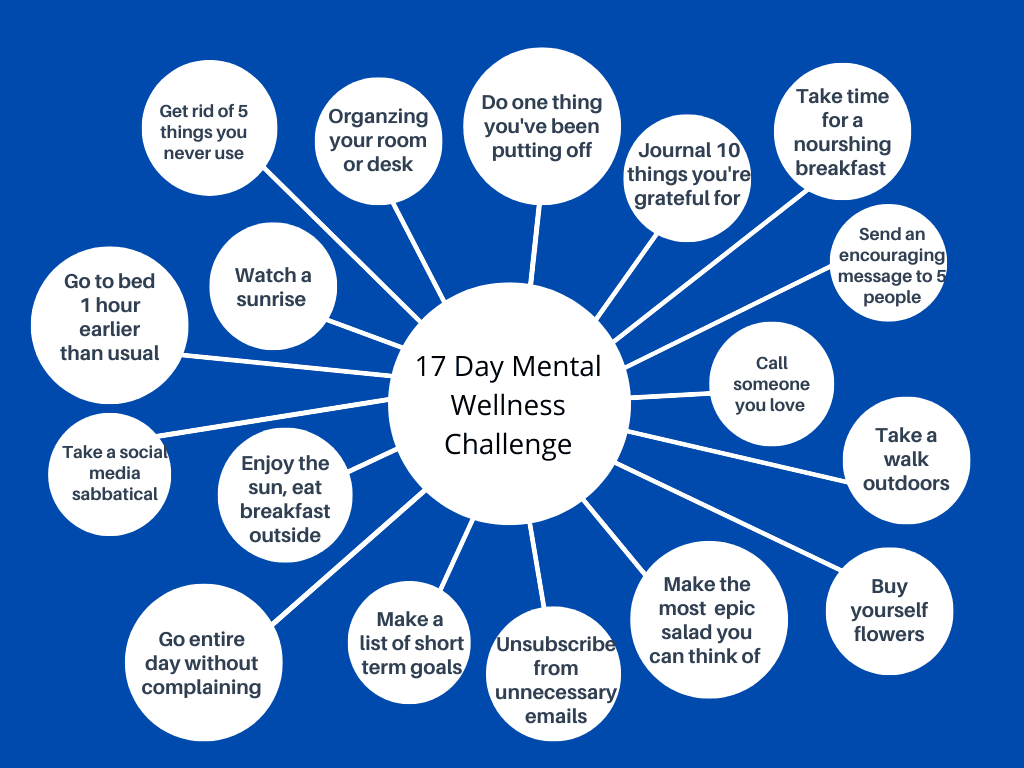
Try this 17 day challenge .
Pick one activity each day. See how your mental wellness improved at the end of the challenge.
 Julie Stobbe is the 2024-2025 winner of the Harold Taylor Award for outstanding contributions to the organizing industry and Professional Organizers in Canada. As a Trained Professional Organizer and Lifestyle Organizing Coach, she brings happiness to homes and organization to offices, coaching you virtually using Zoom. She has been working with clients since 2006 to provide customized organizing solutions to suit their individual needs and situations. She uses her love of teaching to reduce clutter, in your home, office, mind and time. She guides, mentors and supports you to be accountable for your time, to complete projects and to reach your goals. If you’re in a difficult transition Julie can coach you to break-free of emotional clutter constraining you from living life on your terms. Online courses are available to help instruct, coach and support your organizing projects. Get started by downloading Tips for Reorganizing 9 Rooms.
Contact her at julie@mindoverclutter.ca